The Weaning Phase is Crucial for Healthy Kid Development
In kid rearing, weaning is a critical phase. It marks the end of the milk-feeding period and the beginning of rumen development. However, this transition should not be as abrupt as it may sound here.
The foundation of a successful weaning process is a well-developed and functioning rumen. The rumen plays a key role in the transition from milk feeding to consuming solid feed. For a kid, this is a major change that we aim to achieve within a relatively short period.
It is important to wean only healthy, vigorous kids. Kids that are not in good condition are better kept on milk for longer to regain strength. These animals need their energy to recover, rather than expending it coping with the stress of weaning.
Research has shown that kids should be at least seven weeks old before being weaned. Kids weaned at six weeks tend to experience greater setbacks in weight, condition, and health. Additionally, a kid should weigh at least 13 kg at the time of weaning to ensure it has sufficient reserves to handle the transition.
Stimulating feed intake
The most important factor is ensuring that kids consume as much solid feed as possible before weaning. Below are some practical tips to maximize feed intake in young kids:
- Introduce water, fibre, and concentrate as early as possible. The earlier kids are exposed, the sooner they will begin to explore and consume these feeds.
- Water: Always provide fresh water that is easily accessible.
- Fibre source: Preferably offer chopped straw. Hay can also be used, but its nutritional content (especially protein) is less predictable. In addition, hay can sometimes be too palatable, which may reduce concentrate intake.
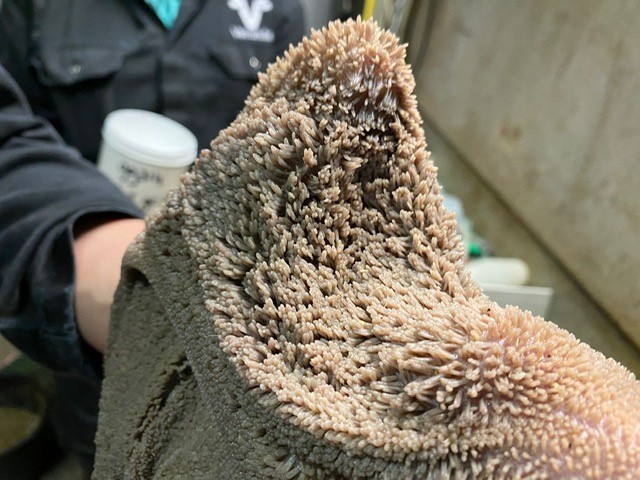
- Concentrate: Offer ad libitum access to a pelleted feed that contains sufficient starch (to stimulate rumen papillae development), adequate protein (to support growth), and good energy value (for efficient growth).
- Offer concentrate and fibre separately, allowing kids to regulate their own intake ratio. This supports optimal rumen development.
- Avoid additional changes around weaning, such as diet changes, pen changes, or regrouping. Minimizing stress supports better concentrate intake.
- Make milk feeding less attractive or more difficult:
- Replace nipples several times per week with new ones that create more resistance to milk flow.
- Increase the number of kids per nipple during the weaning phase (e.g., at least 20 kids per nipple).
- Gradually remove nipples:
- For example, remove two nipples every three days and place them in water with electrolytes.
- Electrolytes support hydration, and increased water intake helps stimulate solid feed intake.
- After three days, remove these nipples completely and repeat the process with the next two.
- Always finish with at least two nipples to avoid excessive competition and stress. Kids are herd animals and prefer to feed together.
- Provide sufficient feeding space so kids can eat simultaneously—“seeing others eat encourages eating.”
Final goal
The ultimate goal is to achieve optimal rumen development, ensuring a smooth and successful transition from milk to solid feed.

Other current affairs
-
09 March 2026
Building a stronger goat operation, one step at a time at Lucky Dairy
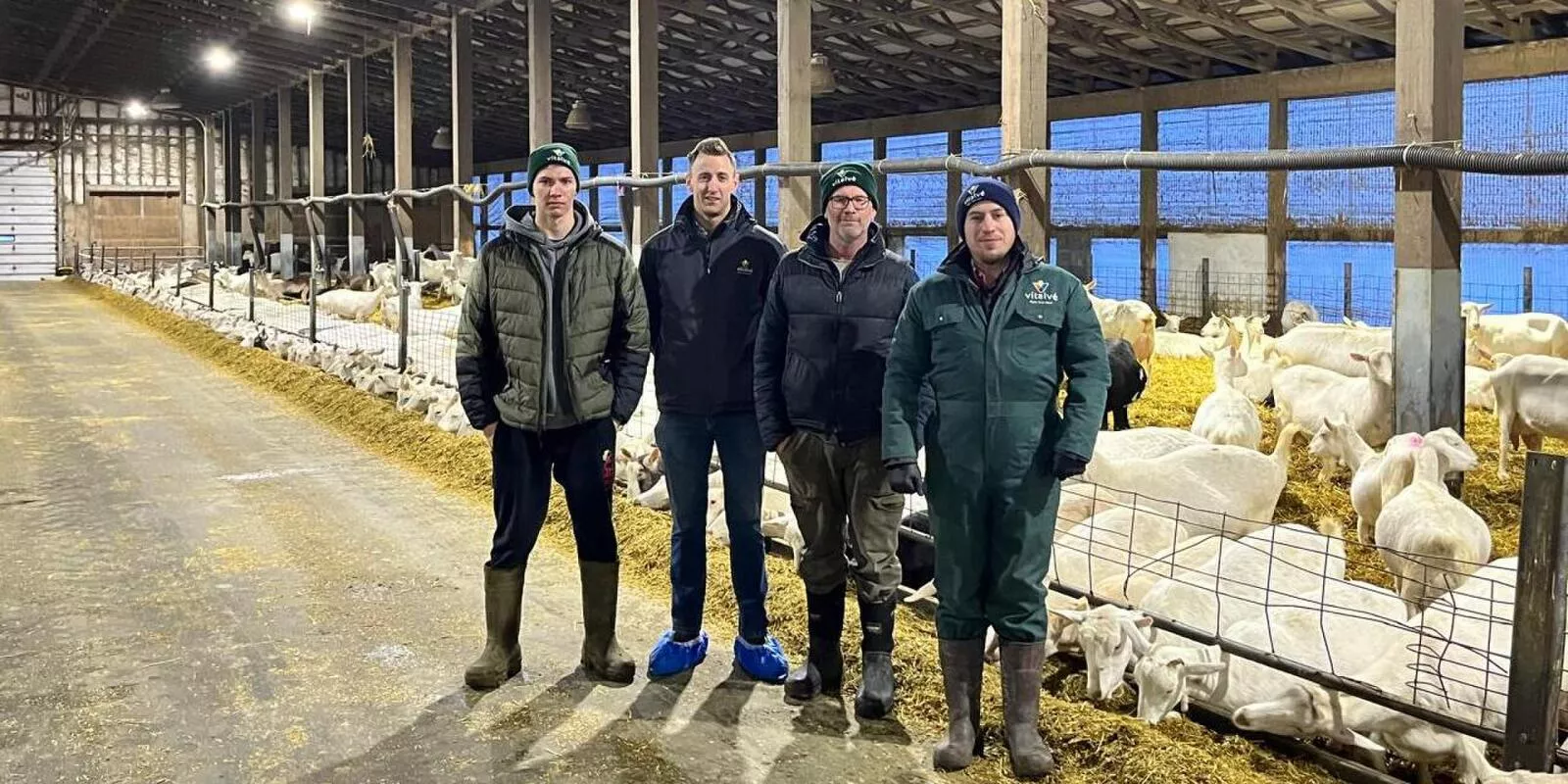
Just outside Williamstown near Cornwall, Ontario, you’ll find Lucky Dairy. The farm is run by David Grant, together with a dedicated team that keeps the dairy goat operation running smoothly every day.
Read more
-


01 October 2025
Make the Most of Breeding Season - Start Prepared
The days are getting shorter: the natural breeding cycle is starting up again. This is the ideal moment to breed your kids. With the following tips, you’ll ensure the breeding season goes smoothly.
Read more
-

19 August 2025
Transition Period for Dairy Goats Before the Fall Kidding Season and the Impact of Heat Stress
The Transition Period In dairy goat management, the transition period in the weeks leading up to the fall kidding season is a critical phase for both production and animal health. This period involves the physiological shift from late pregnancy into...
Read more